
Clogged Main Drain Service That Solves the Cause
When a toilet bubbles after the washing machine drains, or wastewater rises in a shower that is not in use, the problem is usually bigger than a single fixture. A clogged main drain service addresses the line that carries wastewater from multiple drains out of the building. Acting quickly can help prevent a messy backup, business interruption, and avoidable damage to floors, walls, fixtures, and inventory.
A main drain blockage does not always begin as an emergency. It may start with a slow tub, an occasional gurgling sound, or a toilet that flushes inconsistently. Once the restriction tightens, however, water takes the easiest available path. In a home, that is often a low shower, tub, or floor drain. In a commercial property, it can affect restrooms, break rooms, tenant spaces, or operational areas at the same time.
Signs You Need Clogged Main Drain Service
A slow sink by itself can be a local fixture issue. The main drain becomes more likely when several plumbing fixtures are involved or when one fixture reacts to another being used. Watch for these warning signs:
Multiple toilets, tubs, showers, or sinks draining slowly at once
Gurgling from toilets or drains when water is used elsewhere
Water or sewage backing up through a shower, tub, floor drain, or cleanout
Repeated clogs that return soon after plunging or basic drain cleaning
Unpleasant sewer odors around drains, utility areas, or the exterior cleanout
Do not keep running water to test the problem if wastewater is backing up. Avoid flushing toilets, using washing machines, running dishwashers, or taking showers until the line has been assessed. Every additional gallon sent into a blocked main drain can increase the backup inside the property.
For property managers and commercial operators, quick action also protects more than the plumbing system. A backup can disrupt tenants, employees, customers, sanitation routines, and daily operations. The sooner the source is located, the more options there are for making a controlled repair instead of responding to widespread damage.
What Causes a Main Drain to Clog?
Main drain blockages have different causes, and the right service depends on what is in the line and where the obstruction is located. Grease, food residue, soap buildup, wipes, paper products, and hygiene items can collect over time. Even products labeled as flushable may not move reliably through every plumbing system.
In South Florida, aging pipes and underground conditions can add another layer to the diagnosis. Tree roots may enter small openings at pipe joints or cracks, then catch paper and debris as they grow. Scale buildup, shifted pipe sections, collapsed pipe, construction debris, or a damaged sewer lateral can also restrict flow. In multi-unit buildings, heavy use and improper disposal habits may create recurring blockages even when the piping itself is sound.
That is why a drain that clears temporarily is not always a completed repair. A cable may punch an opening through a soft blockage, but root intrusion, grease-coated pipe walls, or a damaged section can leave the underlying issue in place. Effective service should focus on restoring flow and determining whether the line needs further cleaning, camera inspection, repair, or a maintenance plan.
What Professional Main Drain Clearing Looks Like
A qualified plumber starts by identifying the scope of the problem. This may include asking which fixtures are affected, when the symptoms began, whether a backup has occurred before, and where the cleanout is located. The cleanout provides direct access to the drain or sewer line without removing fixtures whenever the system is properly equipped.
Cable Cleaning for Many Common Blockages
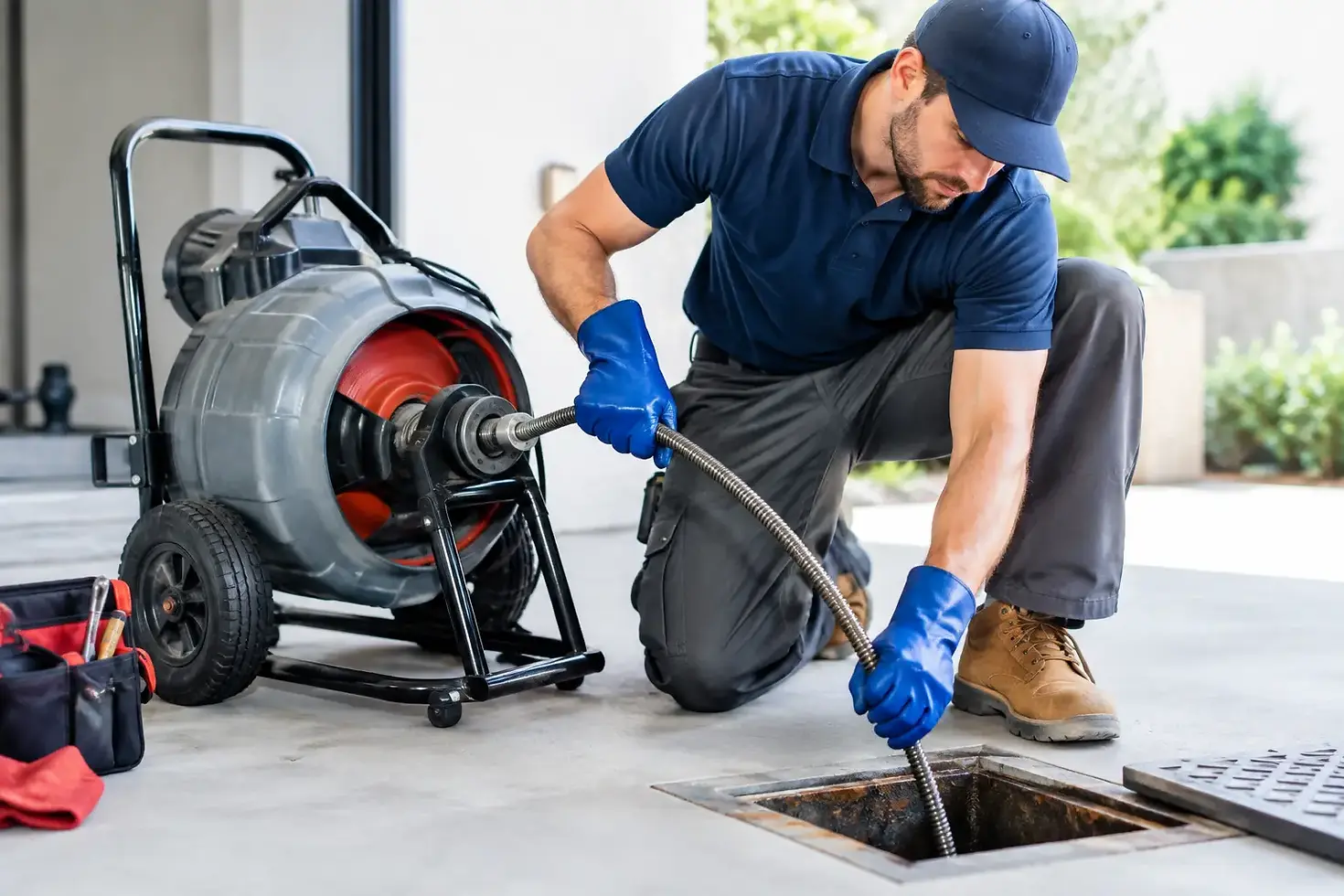
Professional drain machines use a cable and cutting head designed to break apart or retrieve certain obstructions. This is often an effective approach for paper buildup, localized debris, and some root-related clogs. The tool and cable size should match the pipe and blockage, especially in older properties where aggressive equipment can create problems if the pipe condition is unknown.
Cable cleaning can restore service quickly, but it is not automatically the best answer for every line. If grease, sludge, or heavy scale remains on the pipe walls, the opening may close again. If a damaged pipe is causing repeated backups, clearing alone will not correct the structural problem.
Hydro Jetting for Thorough Pipe Cleaning
Sewer jetting uses controlled high-pressure water to scour buildup from the interior of the line. It can be particularly useful for grease, sediment, soap residue, and recurring buildup in residential and commercial drain systems. For restaurants, multi-family properties, and facilities with regular high-volume drain use, jetting may be part of a practical preventive maintenance schedule.
Jetting should be selected carefully. A technician needs to consider pipe material, age, known damage, access, and the nature of the blockage. If there is concern about a break, collapse, or severe deterioration, a camera inspection may be the sensible next step before or after cleaning.
Camera Inspection When the Cause Is Not Clear
A sewer camera inspection provides a view inside the line so the plumber can identify root intrusion, offset joints, cracks, standing water, grease accumulation, or foreign objects. It is especially valuable when backups keep returning, a property has a history of sewer issues, or a renovation or purchase decision depends on knowing the condition of buried piping.
The camera does not repair the line, but it replaces guesswork with useful information. If the pipe is intact and dirty, thorough cleaning may be enough. If the inspection reveals a broken or displaced section, the owner can make a repair decision based on the actual condition rather than repeatedly paying for short-term clearing.
What You Can Do Before the Plumber Arrives
If the main drain is blocked, stop using water fixtures whenever possible. Keep people away from standing wastewater, especially children and pets, and do not attempt to open a cleanout if you are unsure whether the line is under pressure. A blocked line can release wastewater suddenly when a cap is removed.
Do not pour chemical drain cleaners into a suspected main drain clog. These products rarely solve a serious sewer-line obstruction and can create a chemical hazard for anyone working on the line afterward. They may also damage certain pipe materials or fixtures. A plunger can help a single toilet or sink, but repeated plunging is not a solution when several drains are affected.
If it is safe to do so, note where the water appears first and which fixtures trigger the problem. That information helps the technician narrow the diagnosis. For commercial facilities, staff should document affected areas and restrict restroom or kitchen use until service is complete.
When a Main Drain Problem Is an Emergency
A backup containing sewage, water rising from a floor drain, or a blockage affecting an occupied commercial building deserves immediate attention. So does any drain problem that threatens electrical equipment, finished interiors, stocked merchandise, or critical operations.
Ringemann Plumbing Inc. provides 24/7/365 plumbing support with stocked service vehicles for urgent drain and sewer issues throughout South Florida. For homeowners, property managers, and facility operators, the goal is straightforward: get a qualified technician on site, control the immediate problem, and recommend the appropriate next step based on the condition of the line.
Preventing the Next Backup
Prevention is not one-size-fits-all. A newer home with a one-time paper blockage may only need better disposal habits. An older property with root intrusion or recurring scale may benefit from scheduled cleaning and periodic camera inspections. Commercial properties with heavy restroom, kitchen, or tenant use often need a documented maintenance plan that fits their actual usage patterns.
Keep grease, wipes, hygiene products, coffee grounds, and food scraps out of drains. Use strainers where appropriate, and address slow drainage before it becomes a complete stoppage. If the same line has clogged more than once, ask whether cleaning the pipe walls or inspecting the line would provide a more durable answer than another temporary opening.
A main drain backup is disruptive, but it does not have to turn into a larger property problem. Shut off water use, protect the affected area, and have the line evaluated with the right equipment. The best repair is the one that restores flow now and gives you a clear path for preventing the next interruption.



Comments