
The Water Heater Replacement Process Explained
A failed water heater is rarely convenient. It may show up as a cold shower, rusty water, a leaking tank in a utility closet, or a unit that cannot keep up with a busy household or commercial demand. The water heater replacement process should move quickly when needed, but it should not be rushed past the decisions that protect your property, meet code requirements, and provide reliable hot water for years to come.
For homeowners, property managers, and builders across Miami-Dade, Broward, and Palm Beach counties, replacement starts with understanding what failed, what size and fuel type the property requires, and whether a new installation creates an opportunity to improve efficiency or capacity.
Start With a Clear Diagnosis
Not every hot-water issue requires a new unit. A failed heating element, thermostat, pilot assembly, gas control valve, or breaker may be repairable. Sediment buildup can also reduce performance, particularly in older tank-style heaters that have not been maintained.
A professional inspection helps separate a practical repair from a replacement that makes better financial sense. Age matters. Traditional tank water heaters commonly last about eight to 12 years, although water quality, installation conditions, maintenance, and usage all affect lifespan. If an older tank is leaking from its body or base, replacement is generally the right path. Tank leaks cannot be safely repaired.
A technician should also check the surrounding plumbing connections, shutoff valves, venting on gas units, electrical supply, drain pan, pressure relief valve, and signs of prior water damage. Replacing only the heater while overlooking a corroded valve or an improper drain connection can create another service issue soon after the installation.
Choose the Right Water Heater for the Property
The best replacement is not always the same model or the largest available unit. It must match the building's hot-water demand, available utilities, physical space, and budget.
A standard storage-tank heater is a familiar, dependable choice for many homes and smaller commercial applications. It stores a set amount of hot water and is usually less expensive to install than a tankless system. The trade-off is that a tank can run short during periods of heavy demand, and it occupies more floor space.
Tankless water heaters heat water as it flows through the unit. They can provide a continuous supply when properly sized and are often a strong fit for households seeking space savings and long-term energy efficiency. However, tankless installation may require upgraded gas piping, dedicated electrical circuits, new venting, or changes to water lines. The upfront investment can be higher, so the decision should be based on the property rather than a one-size-fits-all recommendation.
Fuel source is equally important. Electric water heaters can be practical where gas is unavailable or where electrical capacity is adequate. Gas units can offer faster recovery rates and may be preferred for larger households or high-demand applications. For commercial, industrial, remodeling, and new-construction projects, sizing should account for actual fixture counts, occupancy, operating schedules, and peak demand.
What Happens During the Water Heater Replacement Process
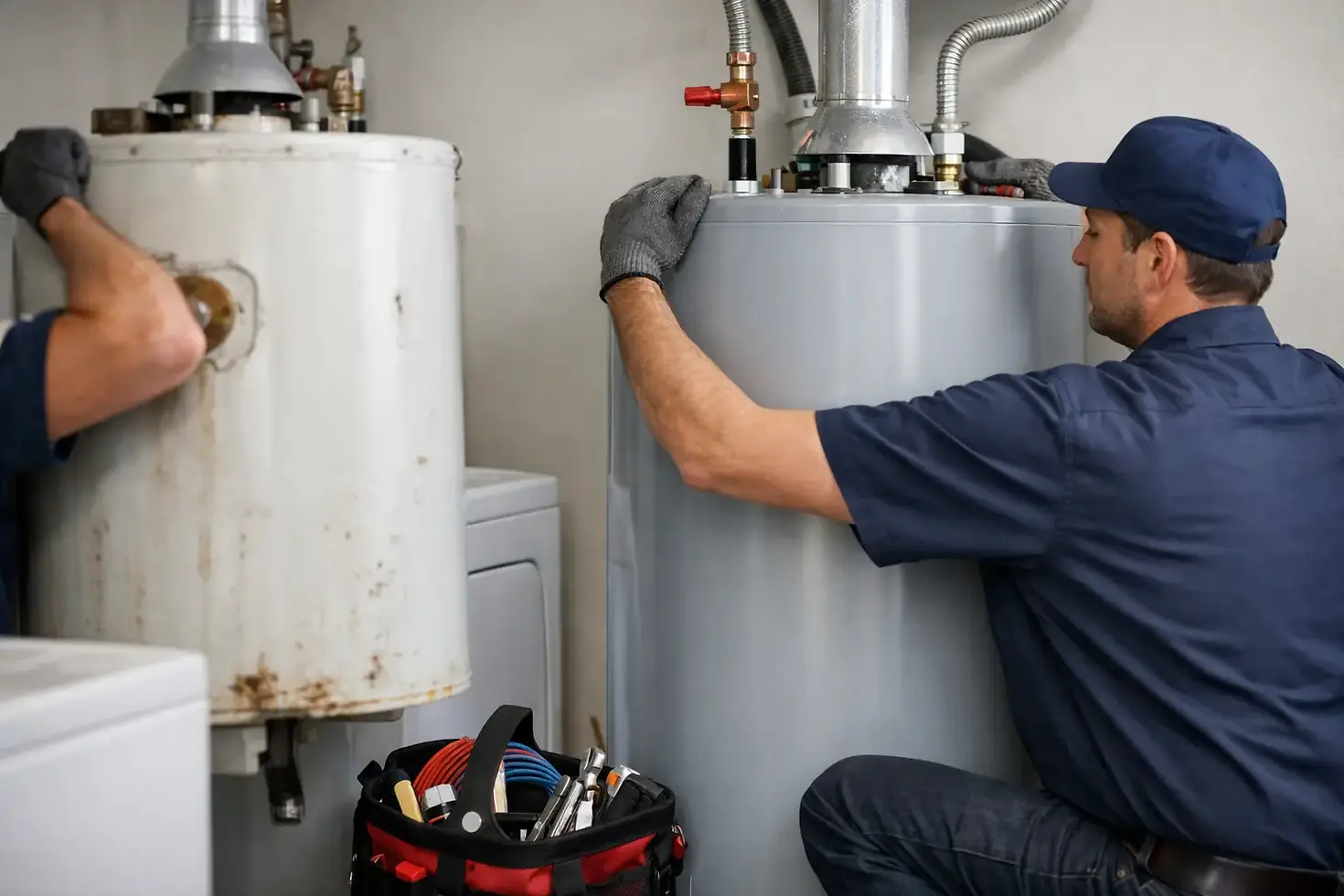
Once the correct unit has been selected, the installation follows a disciplined sequence. The first step is making the work area safe. The water supply is shut off, and the power or gas supply is disconnected. With gas equipment, the gas line must be handled by a qualified, licensed professional. With electric equipment, the circuit must be shut down and verified before work begins.
The existing tank is drained before it is disconnected and removed. Depending on its condition, draining can take time, especially when sediment has accumulated near the bottom of the tank. Technicians protect nearby flooring and access areas because even a controlled removal can involve residual water.
Next, the installation area is evaluated and prepared. This may include replacing worn supply lines, correcting valve issues, installing a drain pan, ensuring the pan has a proper drain route, and confirming that the new heater fits the available clearance requirements. A properly installed temperature and pressure relief valve is essential. It provides a safety path if pressure or temperature rises beyond safe operating limits, and its discharge piping must terminate correctly.
For a gas heater, the installer connects and tests the gas supply, confirms proper combustion air and venting, and checks for leaks. Venting is not an area for shortcuts. Incorrect vent materials, poor connections, or improper slope can create serious safety concerns. For electric units, the installer confirms that wiring, breaker size, voltage, and disconnect requirements are appropriate for the new equipment.
The tank is filled completely before an electric unit is energized. Turning on an electric water heater before the tank is full can damage its heating elements. Once filled, the plumbing connections are inspected for leaks, the unit is started, and the temperature is set and verified.
Permits, Codes, and South Florida Conditions
Water heater replacement often involves permit and code requirements, especially when gas piping, venting, electrical systems, or plumbing layout changes are part of the work. Requirements vary by municipality and project scope. A like-for-like replacement may be more straightforward than converting from electric to gas, moving the unit, or installing a tankless system.
Professional installation is about more than getting hot water back on. It is about making sure the work is safe, code-compliant, and documented appropriately. This is particularly important for property managers, commercial operators, builders, and homeowners planning to sell or remodel in the future.
South Florida also presents practical considerations. Water heaters are often installed in garages, utility rooms, closets, attics, or exterior-adjacent spaces where heat, humidity, limited access, and drainage need careful attention. A small leak can become a costly problem when a heater sits above finished areas or near stored belongings. Drain pans, properly routed discharge piping, and accessible shutoff valves are details that deserve attention during replacement.
Prepare Before the Installer Arrives
A little preparation can help the appointment stay efficient. Clear a path to the water heater and remove stored items around the unit. If the heater is in a closet, garage, attic, or tight utility area, make sure the technician can safely reach the equipment and connections.
Have any useful information available, including the age and model of the existing heater, recent symptoms, whether the problem is intermittent or constant, and any changes in household hot-water use. A growing family, a remodeled bathroom, a new soaking tub, or added commercial fixtures may change the capacity the property needs.
If there has been active leaking, turn off the water supply to the heater if it is safe to do so. For a major leak, gas odor, damaged vent pipe, or electrical concern, do not attempt a repair yourself. Prompt professional service protects the building and the people in it.
After Installation: What to Check
After the new heater is operating, the installer should confirm that hot water reaches fixtures, connections are dry, and the unit responds properly. You should know where the water shutoff is located and understand the basic operating controls. Gas units should have clear guidance on pilot and control operation, while electric and tankless systems may have digital settings or maintenance indicators.
Temperature setting matters. Many properties use a setting around 120 degrees Fahrenheit to balance comfort, energy use, and scald protection, but the right setting can depend on the building's needs and equipment. Higher settings may be needed in certain commercial environments, but they also increase burn risk and may require mixing valves.
Keep the area around the heater clear after installation. Avoid storing chemicals, paint, cardboard, or other materials against the unit, especially near gas equipment. Periodic maintenance can help protect performance, including checking the pressure relief valve, inspecting for leaks, and flushing a tank when appropriate. Tankless systems also need maintenance, particularly where mineral buildup may affect internal components.
When Fast Replacement Matters
A water heater failure can disrupt a home, restaurant, office, rental property, or construction schedule. That is why response time, stocked vehicles, and qualified installation matter as much as the equipment itself. Ringemann Plumbing brings licensed plumbing and gas expertise, OSHA-certified professionals, and 24/7/365 service support to water heater needs throughout South Florida.
If your water heater is leaking, failing to recover, producing discolored water, or nearing the end of its service life, do not wait for a small problem to become water damage or a complete loss of hot water. A careful evaluation now gives you time to choose the right replacement instead of making a pressured decision later.


Comments