
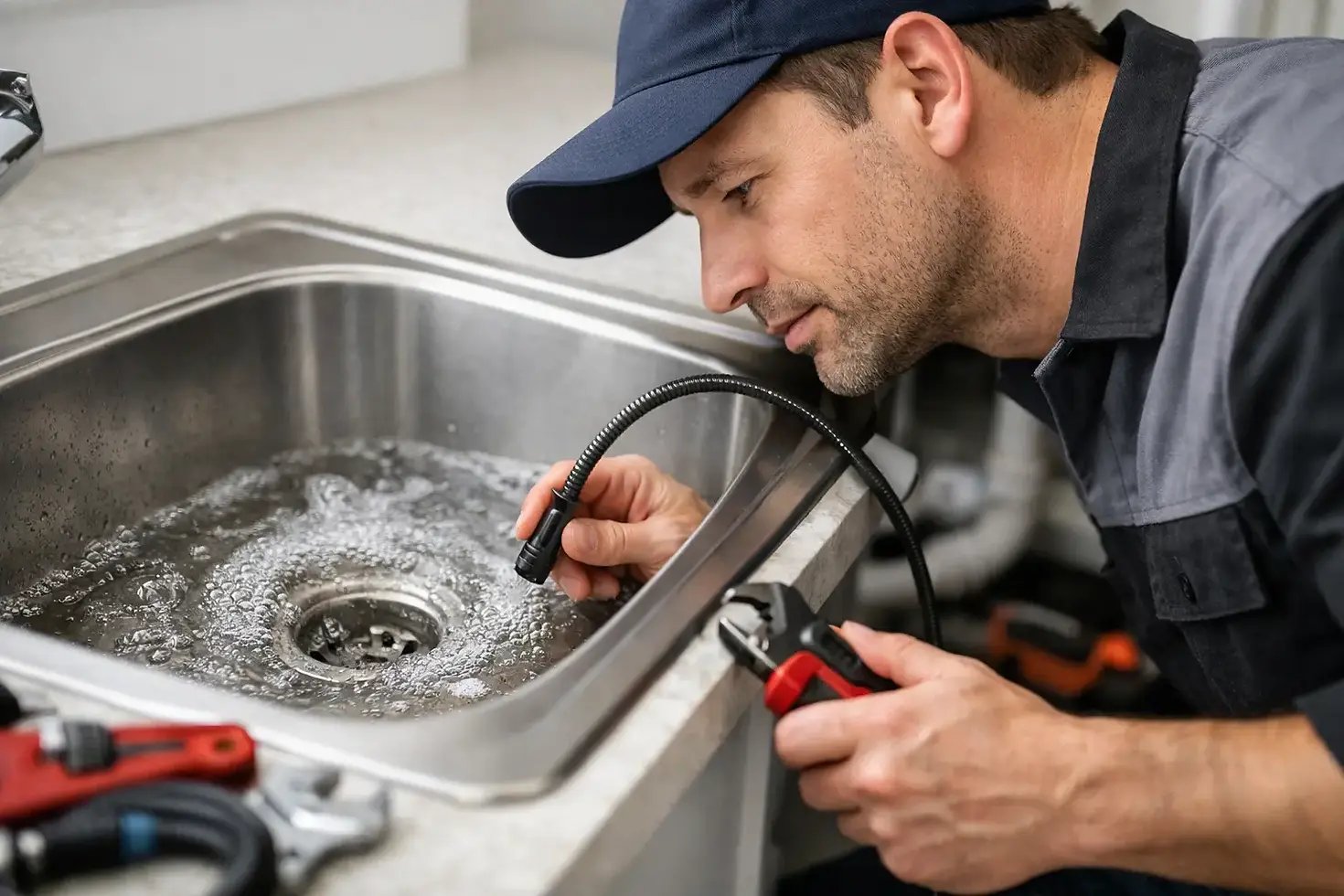
Why Is My Drain Gurgling? Causes and Fixes
A drain that gurgles is doing more than making an annoying noise. If you are asking, “why is my drain gurgling,” the sound usually means air is struggling to move through a plumbing system that should be flowing freely. A small issue can sometimes be handled early. Other times, gurgling is the first warning before a slow drain, sewage backup, or water damage.
The key is noticing where and when it happens. A single bathroom sink that gurgles after use may have a local blockage. Multiple fixtures making noise, especially when a toilet flushes or a washing machine drains, can point to a larger drain or sewer line concern.
Why Is My Drain Gurgling?
Your home or building drain system relies on two things working together: water moving down the pipes and air moving through the vent system. When wastewater flows, it needs air behind it to keep pressure balanced. If a clog, obstruction, or vent issue interrupts that balance, air may bubble back through the water in a sink, shower, tub, or toilet.
That bubbling sound is the gurgle. It does not always mean an emergency, but it should not be ignored either. South Florida properties can face added drain challenges from mature landscaping, shifting ground conditions, aging pipe materials, and heavy use in multi-bathroom homes or commercial spaces.
A Partial Drain Clog
A partial clog is one of the most common causes. Hair, soap residue, grease, food particles, paper products, and mineral buildup can narrow a pipe over time. Water may still drain, but it moves around the obstruction unevenly and pulls air with it.
A kitchen sink that gurgles after the dishwasher runs may have grease or food debris farther down the kitchen branch line. A shower or bathroom sink may be dealing with hair and soap buildup. These local clogs are often easier to address than a main sewer blockage, but chemical drain cleaners are rarely the right long-term answer. They may not clear the actual obstruction, can damage certain pipes, and create a safety concern for anyone working on the drain afterward.
A Blocked Plumbing Vent
Plumbing vents extend through the roof and allow sewer gases to exit while bringing air into the drainage system. If a vent is blocked by leaves, nesting material, debris, or damage, fixtures may drain slowly or make gurgling noises.
Vent problems can be difficult to confirm safely because the issue may be on the roof or inside a wall. They can also resemble a clog. A professional evaluation helps identify whether the restriction is in the drain pipe, the vent, or both, so the repair addresses the real cause instead of just reducing the symptom.
A Main Sewer Line Restriction
When several drains gurgle, the main sewer line deserves attention. Your home’s individual fixture drains eventually connect to a larger line that carries wastewater to the municipal sewer connection or septic system. A restriction in that main line affects more than one room.
Common signs include a toilet that bubbles when the washing machine drains, water rising in a shower when a toilet is flushed, repeated clogs in different bathrooms, or wastewater appearing at the lowest drain in the building. In a single-story home, that low point is often a shower or tub. In commercial properties, it may be a floor drain.
Main line restrictions can result from wipes, excessive paper products, grease, scale, broken pipe sections, or roots entering through joints and cracks. The right repair depends on the pipe condition and the location of the obstruction. Clearing a line without understanding why it clogged can lead to the same problem returning soon after.
Tree Root Intrusion or Aging Pipes
Roots naturally seek moisture. If an older sewer pipe has loose joints, cracks, or deteriorated sections, roots can enter and expand inside the line. At first, they catch debris and cause occasional slow drainage. Over time, they can create a serious blockage.
Older properties may also have pipe materials that corrode, scale up internally, sag, or crack. These issues are not visible from a sink or toilet, which is why a camera line inspection is often the most efficient next step for recurring gurgling or repeat backups. It allows a technician to see the condition of the pipe and recommend cleaning, repair, or replacement based on evidence.
How to Tell Whether the Problem Is Local or Larger
Pay attention to the pattern before trying a fix. If only one fixture is affected and all other drains work normally, the problem may be close to that fixture. For example, a bathroom sink with slow drainage and a gurgle may have a stopper assembly or nearby trap blockage.
If two or more fixtures react to each other, assume the issue may be farther down the line. A toilet flushing that causes the tub to bubble is not usually a simple tub-drain clog. Likewise, if the kitchen sink gurgles when a laundry machine pumps out water, the shared drain line may be restricted.
The following signs call for prompt professional service:
Gurgling in several drains or toilets
Water backing up into a tub, shower, sink, or floor drain
Sewage odors inside or around the property
Repeated clogs after plunging or basic cleaning
A toilet bowl level that rises, falls, or bubbles unexpectedly
Wastewater around a cleanout or outside drain connection
For property managers and commercial operators, recurring drain noise should be documented with the fixture location, time of day, and equipment in use. Those details can help identify whether the issue is tied to a specific branch line, a grease-related problem, a high-use period, or the main sewer.
Safe Steps You Can Try First
If there is no backup and only one fixture is affected, start with simple, low-risk checks. Remove visible hair or debris from a sink or shower stopper. Run hot water through a kitchen sink only if grease is not heavily present, and use a plunger correctly with enough water in the fixture to create a seal.
For a sink, seal the overflow opening with a wet cloth before plunging. For a double-bowl kitchen sink, plug the second side. A toilet requires a flange-style toilet plunger, not a flat sink plunger. Use steady pressure rather than aggressive force that could splash contaminated water or damage a fixture.
Avoid flushing wipes, even products labeled flushable, and do not repeatedly pour chemical cleaners into a noisy drain. Do not use a drain snake if you are unsure of the pipe layout or if chemicals have already been added. A cable can damage certain piping, become stuck, or push a partial blockage farther into the system.
When to Call a Plumber for a Gurgling Drain
Call for service right away if wastewater is backing up, sewage is visible, or multiple drains are affected. These situations can escalate quickly, especially during a busy household morning, after a heavy rain event, or in a commercial setting where restroom availability matters.
A qualified plumbing technician can determine whether drain cleaning, sewer jetting, a camera inspection, vent service, or a pipe repair is needed. Drain cleaning may remove a localized blockage. Jetting can be effective for grease, sludge, roots, and buildup in appropriate lines. A camera inspection is especially valuable when the problem keeps returning or a property has older underground piping.
The best solution is not always the fastest temporary clear. If a line repeatedly clogs because of roots, a broken section, poor slope, or heavy scale, the long-term cost can be lower when the underlying condition is identified early.
Protecting Your Drains After the Repair
Once the drain is flowing correctly, a few habits can reduce future trouble. Keep cooking grease out of kitchen drains, use hair catchers in showers, and put only toilet paper and human waste in toilets. In homes with older sewer lines or large trees near the service line, planned inspections and maintenance can prevent a surprise backup.
For restaurants, multi-unit properties, and facilities with frequent drain use, maintenance should match the actual load on the system. Grease, paper products, cleaning supplies, and high-traffic restrooms can create problems that do not show up in a typical home.
A gurgling drain is your plumbing system asking for attention before it becomes louder, dirtier, and more expensive. Ringemann Plumbing provides responsive drain and sewer diagnostics for South Florida properties, with the equipment and experience to find the cause and complete the work properly.


Comments